| |
| Thursday, 12 November 2026 |
| CINEMA CHEVALERSQUE: THE KNIGHT ON SCREEN |
| Dr Tobias Capwell |
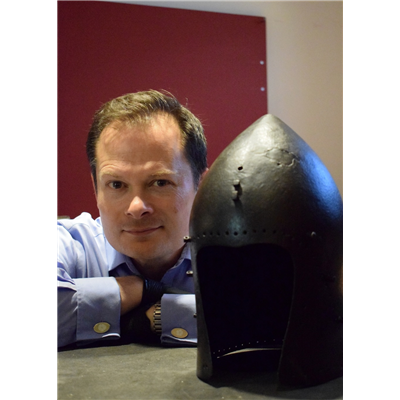 |
History is often not what happened, it is what someone wants you to think happened. Stories about the past are often ‘improved’, to speak more to present concerns, or to be more satisfying emotionally. The Middle Ages is one of the most misunderstood periods in human history. It is ridiculed, satirised, wondered at and glorified in equal measure, and for over a hundred years, cinema has been an important forum for that process. Movies set in the medieval period are as numerous as Westerns, and have become, over time, one of the dominant sources for our awareness of the ‘Age of Chivalry’. In this slightly light-hearted lecture, we ‘out’ some of the worst offenders in the history of medieval cinema and celebrate a few of the rare heroes, judging them against the reality on which they are supposedly based. Dr Tobias Capwell Toby Capwell is an independent scholar and leading authority on medieval and Renaissance arms and armour. Over the last thirty years he has worked with many of the world's great collections, including the Imperial Armoury in Vienna, the Metropolitan Museum of Art in New York, and the Royal Armouries in Leeds. He has also served as curator of Glasgow Museums and the Wallace Collection, where he worked for sixteen years until January 2023. He is a Fellow of the Society of Antiquaries and a Freeman of the Worshipful Company of Armourers in London. He is the author of many books on armour, weapons and tournaments, has curated numerous exhibitions, and frequently appears in film, television and online media. |
|
| Thursday, 14 January 2027 |
| CREATING FROM THE HEART: MARC CHAGALL |
| Dr Angela Smith |
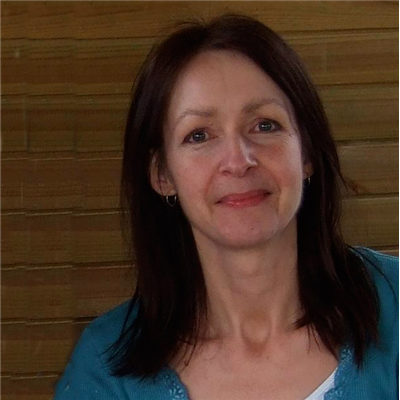 |
This lecture offers a survey of the life and long career of Russian born artist, Marc Chagall (1887-1985). We will examine his varied oeuvre which consisted of paintings, book illustrations, stage sets, tapestries and designs for stained glass including projects he undertook for Tudeley Church in Kent and Chichester Cathedral. Dr Angela Smith Angela Smith has PhD from the Warburg Institute, London University and is an author of numerous articles and several books including A Timeline of Art History (2013). She is an experienced lecturer and has catalogued paintings in galleries for the National Inventory Research Project. This is in addition to her work as part of The Arts Society talking on subjects including Women artists down the centuries and English church art and architecture. She has also contributed to a number of television programmes, most recently an episode of Digging up Britain’s Past. |
|
| Thursday, 11 February 2027 |
| ART ON THE SILK ROUTE |
| Ms Sarah Jaffray |
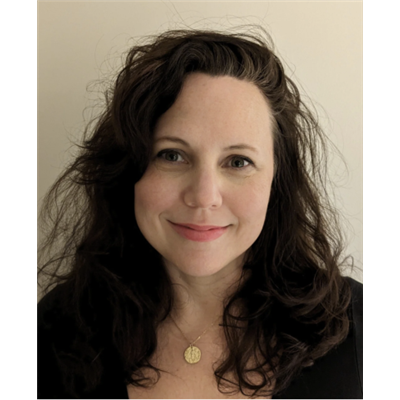 |
The Silk Road ran over 4,000 miles for approximately 1,000 years. That’s a lot of cultural exchange to cover in one hour, but we’ll do it. This talk introduces the value of studying art across borders and beliefs and we’ll explore how art can tell us about the cultural relations that developed across history’s largest trade route. After introducing the artistic origins of this trade route, we’ll look objects in a variety of mediums from textiles and ceramics to stone sculpture and painting to see how travel, trade and human interaction laid the foundations of the modern world. Sarah Jaffray Sarah Jaffray is an art historian, educator, curator and writer based in London. Her MA in Art History focused on the links between poetry and painting in late 19th century France while her MA in Cultural Studies focused on photography and political protest. Before her current position heading the art history programme at City Lit, she was the lead educator for the Bridget Riley Art Foundation in the Department of Prints and Drawings at the British Museum. She has also worked at the Wellcome Collection exploring the connections of art, medicine and human experience, and before relocating to London Sarah was as a tenured professor of Art History based in Los Angeles. Sarah lectures on a variety of topics, preferring to place artworks and objects in their wider social and cultural contexts, emphasising new narratives and approaches to Western Art History. Her art historical research emphasises modern art, the politics and philosophies of the 19th and 20th centuries and how they are related to the artistic process. |
|
| Thursday, 11 March 2027 |
| GILDING THE STAGE: A BRIEF HISTORY OF THE MODERN OPERA HOUSE |
| Professor Raymond Holden |
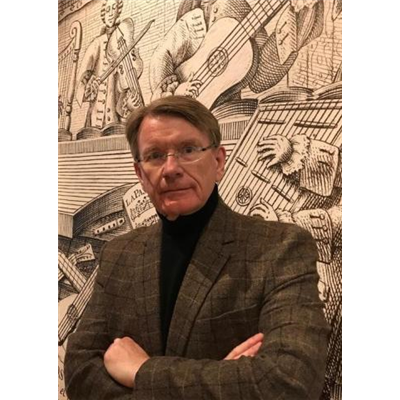 |
The modern opera house is often the beating cultural heart of many cities around the world. It is both a centre of musical excellence and a barometer for cultural change. Throughout its long history, the opera house has not simply been a place of lyrical excellence, but a venue where the great and good have come to meet and where music lovers have come to be uplifted, educated and enthralled. Singers dazzled, directors outraged, and conductors often cut their musical teeth in theatres that were as awe inspiring as they were daunting. Professor Raymond Holden Born in Australia, Professor Raymond Holden studied at Sydney, Cologne and London and is both a critically acclaimed and a multi award-winning writer, conductor, broadcaster and lecturer. He has performed with the Philharmonia Orchestra, the Danish Radio Symphony Orchestra, the BBC Symphony Orchestra, the Orchestra of the Emilia Romagna and the New Symphony Orchestra of London. His work has been published regularly by Oxford, Cambridge and Yale University Presses, the Royal Academy of Music Press, Hans Schneider Verlag (Vienna) and by ICA, EMI and Warner Classics. Professor Holden has appeared on BBC Television and Radio, Servus TV (Germany), RAI Television and Radio, ABC Classic FM, 3MBS FM, Vision Australia Radio, SRF (Switzerland) and Classic FM (South Africa) and has spoken at many of the world’s leading music and literary festivals, universities, conservatoires and research institutes. He was appointed a Member of the Order of Australia (AM) in the 2019 Queen’s Birthday Honours List and is currently Emeritus Professor of Music at the Royal Academy of Music, London. |
|